

If you have ever wondered why does my cat lick me, the short answer is this: your cat is communicating with you.
Licking can mean affection, trust, grooming, attention-seeking, scent marking, curiosity, stress, or even a medical concern.
The meaning depends on the context.
A relaxed cat licking your hand while purring is usually showing comfort. A cat licking you nonstop, biting afterward, or acting restless may be expressing stress or overstimulation.
Understanding this behavior helps you respond with more confidence and less guesswork.
Why Cats Lick People
Cats use licking in several natural ways.
They lick themselves to stay clean, regulate their coat, and manage comfort. They also lick other cats as part of social bonding.
This social grooming behavior is often called allogrooming.
When your cat licks you, they may be treating you as part of their social group. Veterinary sources describe licking humans as a behavior linked to affection, attention, stress, taste, and bonding.
In other words, your cat is not being random.
They are using a familiar feline behavior with a human they trust.
1. Your Cat Is Showing Affection
One of the most common reasons cats lick their owners is affection.
Kittens are groomed by their mothers, and friendly cats may groom each other when they have a close bond.
If your cat licks you during a calm moment, it may be their way of saying you are safe and familiar.
This does not mean cats feel affection exactly the way humans do. Cats have their own emotional language.
For them, licking can sit alongside other signs of trust, such as slow blinking, rubbing against you, sleeping near you, and exposing their belly without tension.
2. Your Cat Is Grooming You
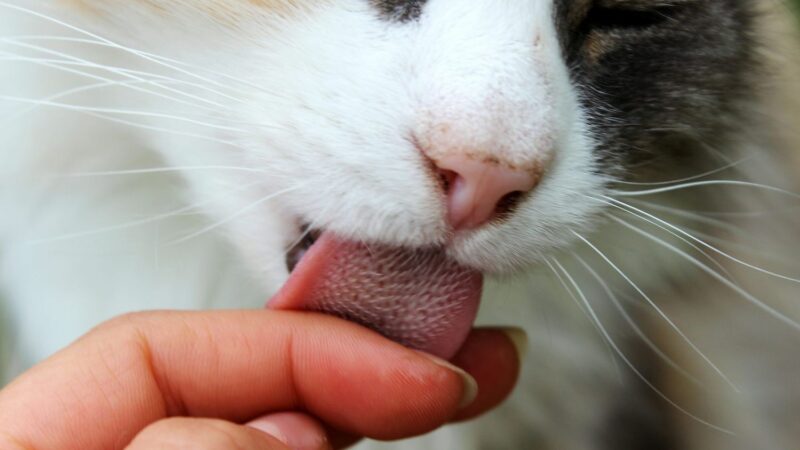
Your cat may also be trying to groom you.
From a cat’s perspective, grooming is practical and social. It keeps the coat clean, but it also reinforces connection.
Since you do not have fur, your cat may lick your skin, hair, clothes, or hands instead.
This can feel strange because a cat’s tongue is rough. That rough texture comes from tiny backward-facing structures that help cats clean their coat.
If your cat licks your hair or face gently, they may be applying the same care they would use with another cat.
3. You Taste Interesting
Sometimes the answer to why does my cat lick me is very simple: your skin tastes interesting.
Cats may be drawn to sweat, salt, lotion, soap, food residue, or the scent of something you touched.
If your cat licks your fingers after you cooked chicken, handled treats, or used a scented product, the motivation may be sensory.
This is usually harmless, but be careful with skincare products.
Some lotions, essential oils, medicated creams, and topical products can be unsafe if a cat ingests them. If you have applied anything to your skin, it is better not to let your cat lick that area.
4. Your Cat Wants Attention
Cats are excellent at learning what gets a reaction.
If your cat licks you and you talk, pet them, feed them, or play with them, they may repeat the behavior.
In this case, licking becomes a request.
Your cat may be saying, “Look at me,” “Feed me,” “Play with me,” or “Stop ignoring me.”
This is especially likely if the licking happens near mealtime, when you are using your phone, or when your cat wants access to your lap.
Attention-seeking licking is not bad behavior.
It is communication. The key is to respond intentionally instead of accidentally rewarding behavior you do not want.
5. Your Cat Is Marking You
Cats understand the world through scent.
They rub their face on furniture, people, and other animals to deposit scent and create familiarity.
Licking can also be connected to scent.
When your cat licks you, they may be mixing their scent with yours. That can help them identify you as part of their safe environment.
This is one reason cats may lick you after you come home.
You may smell different after being outside, touching other animals, going to work, or using new products. Licking may help your cat restore a familiar scent profile.
6. Your Cat Feels Comforted
Licking can be self-soothing.
Some cats lick when they feel secure. Others lick when they are trying to calm themselves.
The difference is in the body language.
A comfortable cat usually has soft eyes, relaxed ears, a loose body, and a steady tail.
A stressed cat may have wide pupils, tense posture, flattened ears, sudden tail movement, hiding, vocalizing, or repetitive licking.
VCA notes that stress or anxiety can lead some cats to lick objects or people, although excessive self-grooming is more common.
If your cat’s licking suddenly increases, look for recent changes in the home.
A move, new pet, new baby, schedule change, construction noise, visitors, or even a different litter box setup can affect feline behavior.
7. Your Cat Was Weaned Early
Some cats develop strong oral behaviors when they were separated from their mother too early.
This may include licking, kneading, suckling blankets, or mouthing soft fabric.
Not every cat that licks was weaned early, so this should not be assumed automatically.
Still, if your cat combines licking with kneading and suckling, especially during relaxed moments, it may be a comfort behavior carried from kittenhood.
In most cases, this is not dangerous unless the cat chews and swallows fabric.
If fabric eating occurs, speak with a veterinarian because intestinal blockage can become serious.
8. Your Cat Is Overstimulated
Many cat owners ask: why does my cat lick me and then bite me?
This often happens when a cat becomes overstimulated.
The interaction may begin as affection, but too much touch or excitement can shift the mood quickly.
A cat may lick, freeze, twitch the tail, turn the ears, and then bite.
The bite may not be aggression. It may be a boundary.
Your cat might be saying, “That is enough,” or “I need space now.”
Watch for early warning signs.
Tail flicking, rippling skin, head turning, tense paws, and sudden stillness can mean your cat is reaching their limit.
Stop petting before the bite happens.
That helps your cat feel respected and reduces the chance of escalation.
9. There May Be a Health Issue
Occasional licking is normal.
Excessive licking is different.
If your cat licks you constantly, licks themselves until hair falls out, develops sores, or seems unable to stop, it may be time for a veterinary check.
Cornell Feline Health Center explains that excessive licking can become abnormal, especially when it causes hair loss, skin damage, or irritation.
Possible causes include allergies, parasites, pain, skin disease, anxiety, or compulsive behavior.
Medical issues should be ruled out before assuming the problem is purely emotional.
Cats often hide discomfort, so behavior changes matter.
If licking becomes intense, repetitive, or linked with appetite changes, hiding, aggression, litter box changes, or weight loss, contact your veterinarian.
Should You Let Your Cat Lick You?
For most healthy adults, an occasional cat lick on intact skin is usually low risk.
However, avoid letting your cat lick open wounds, your mouth, your eyes, or irritated skin.
Pet saliva can carry bacteria, and the risk is higher for infants, older adults, pregnant people, and immunocompromised individuals. A Washington Post health report also notes that people with weakened immune systems should be more cautious with pet saliva exposure.
Good hygiene is enough in most cases.
Wash your hands after heavy licking, keep your cat’s parasite control current, and maintain regular vet visits.
How to Stop Unwanted Licking
If your cat’s licking bothers you, do not punish them.
Punishment can create fear and damage trust.
Instead, redirect the behavior calmly.
Move your hand away, offer a toy, stand up gently, or shift your cat’s attention to a scratching post, food puzzle, or play session.
If your cat licks for attention, avoid rewarding it every time.
Wait for a calmer behavior, then give attention.
This teaches your cat that quiet interaction works better than persistent licking.
When to Call the Vet
Call your vet if licking is sudden, intense, obsessive, or paired with other symptoms.
You should also seek help if your cat is licking one body area repeatedly, losing fur, developing scabs, vomiting hairballs often, or acting anxious.
PetMD notes that licking may be related to affection or attention, but excessive licking can also point to anxiety or medical concerns.
A vet can check for skin problems, parasites, pain, allergies, and stress-related conditions.
The earlier you investigate, the easier it is to treat the cause.
Final Thoughts
So, why does my cat lick me?
Most of the time, it means your cat feels connected to you. Licking can show affection, trust, grooming behavior, curiosity, or a desire for attention.
But context matters.
A relaxed lick during a peaceful moment is usually normal. Repetitive, frantic, or excessive licking deserves closer attention.
The best approach is simple: observe your cat’s body language, respect their limits, keep routines stable, and speak with a vet if the behavior changes.
Your cat may not speak your language, but licking is one of the many ways they try to be understood.
Continue lendo
Why Does My Cat Lick Me? 9 Common Reasons Explained
Why does my cat lick me? Learn what cat licking means, when it shows affection, and when it…
Why Does My Cat Lick Me? 9 Common Reasons Explained
Why does my cat lick me? Learn what cat licking means, when it shows affection, and when it…
Why Does My Cat Lick Me? 9 Common Reasons Explained
Why does my cat lick me? Learn what cat licking means, when it shows affection, and when it…